

Instruments and units
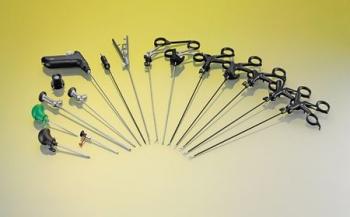
Laparoscopy
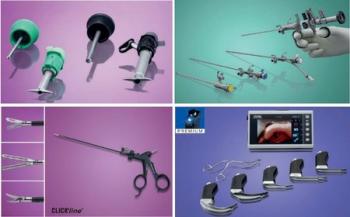
Laparoscopy is a technique that uses a rigid endoscope to look at the organs inside the abdomen and pelvis cavity. Over the decades, Karl Storz has developed an extensive range of telescopes and instruments for general surgery, urology, obstetrics and pediatrics. Today, minimally invasive surgery has become the standard technique for many different specialties. With over 5500 products developed, Karl Storz offers an extremely complete product portfolio of premium quality for laparoscopy.
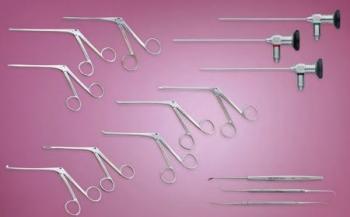
Ear, nose and throat
ENT was the first product line that we brought to the market when Dr. Karl Storz founded the company in 1945 and remains a product group that plays an important role in the company's business strategy today. With more than 6000 instruments, including rigid telescopes of various sizes, flexible fiberscopes and videoscopes as well as a multi-function motor system, Karl Storz offers a highly diversified ENT product portfolio at the top level on the market. In addition, we also provide products for related advanced techniques such as skull base surgery and oto-neurosurgery. Customers can choose for themselves from the basic instruments for practice in the clinic to the complex surgical instruments set combined with the most advanced imaging technology.
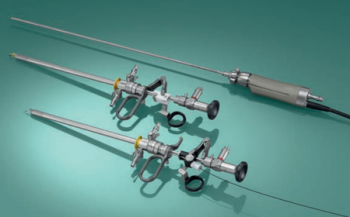
Endoscopy has long become an indispensable part of modern urology. Technologies such as cystoscopy, transurethral resection of the prostate (TURP) and ureteroscopy (URS) have become routine and are continually being improved with new technologies. For each technique, Karl Storz has complete solutions, combining complex telescope system with perfectly compatible instruments. In addition, surgical equipment is also extremely important, including high frequency electrosurgical units, LASER lithotripter in the bladder, ureter and kidneys, rigid and flexible telescopes for procedures in the ureter, gentle stone removal devices, and advanced PDD fluorescence technology.
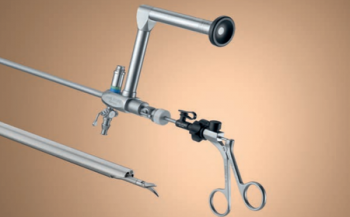
Obstetrics and Gynecology
Hysteroscopy in the diagnosis and therapy of intrauterine disorders is currently the standard procedure in obstetrics and gynecology clinics and is increasingly common in private practice settings. Thanks to the technology of making the hysteroscope smaller in size, many procedures can be performed with minimal invasiveness without the need for anesthesia in the operating room.
In addition to the product line for standard obstetric and gynecological techniques using hysteroscopic and/or laparoscopic systems, Karl Storz also offers a wide range of instruments and telescopes specifically for fetoscopy and reproductive surgery. Amnioscopy techniques for pregnant women and mammary ductoscopy use a semi-rigid telescopes with a diameter of only approximately 0.8 mm. Our product portfolio also includes morcellator systems and devices to perform techniques such as myoma enucleation or supracervical hysterectomies (LASH) and creation of laparoscopic-assisted neovagina.
Pediatric surgery
Children are subject to special anatomical and pathological characteristics and not just a small adult. Instruments used on this subject must be suitable for various anatomical features. In close cooperation with leading surgeons around the world, Karl Storz has developed a complete product portfolio for pediatric surgery, meeting the surgical needs of all ages.
Our products include neurosurgery, ear nose & throat, anesthesia, emergency medicine, thoracic surgery, bronchoscopy, gastrointestinal endoscopy, laparoscopy, urology and proctology. For patients, smaller instruments sizes mean less damage and scarring, as well as post-operative pain relief. For the physician to use, the correctly designed instruments allow for convenient and safe handling. As such, both the doctor and the patient benefit from the correct use of specialized pediatric instruments.
Neurosurgery
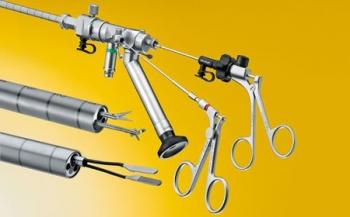
Minimal invasive surgery has brought many new options in the field of neurosurgery, especially in the diagnosis and treatment of lesions in the ventricles and skull base. The endoscope with different angles allows the anatomical structures to be seen in a hidden areas of the brain that cannot be viewed with an operating microscope. In addition, special endoscopes with instrument channels and their own micro-surgical instruments allow the surgeon to perform a variety of difficult intervention techniques.
Techniques that can be performed entirely by endoscopy include removal of the intraventricular legions, surgery of the pituitary gland and transnasal skull base surgery. Endoscopy can also be used as an adjunct to microsurgery or open surgery to view areas that cannot be directly seen with the naked eye or microscope, improving safety and surgical success rates. Karl Storz offers a wide range of intracranial surgical instruments, as well as access to the skull base and is complete with a high-speed motor system with a variety of drilling attachments, craniotome and perforator.
Spine surgery
The prevalence of patients with spinal disorders has increased rapidly in recent years even in the developing world. The function of the spine is based on a harmonious balance between independent structures. The minimally invasive techniques selectively intervene in the lesion area as a breakthrough in the treatment of spinal diseases.
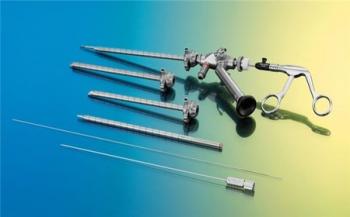
Karl Storz has developed a comprehensive product portfolio for spinal surgery, including instruments and telescopes for complete endoscopic techniques such as PELD, tubular endoscopy such as Easy GO, ENDOSPINE and even other technique of using endoscopy to support microsurgery and open surgery. We also offer high-speed motor systems with a wide variety of drilling functions.
Arthroscopy
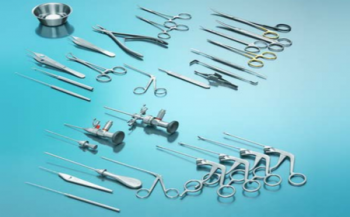
Joints are structures that connect bones together and provide the body with mobility and balance. Factors such as obesity, poor posture, physical inactivity and sports injuries also lead to joint problems and limited mobility. Many minimally invasive techniques can be performed thanks to modern arthroscopic systems. Karl Storz's product portfolio includes a wide range of implant materials for the treatment of shoulder, hip, knee, wrist, elbow and ankle diseases.
In cooperation with leading surgeons, we have developed innovative products and techniques to sew and fix meniscus, edoscopically reconstruct the cross ligaments in the knee, reconstruct shoulder and hip instability with suitable implant materials for each technique such as screws, anchors and thread buttons.
Gastroenterology
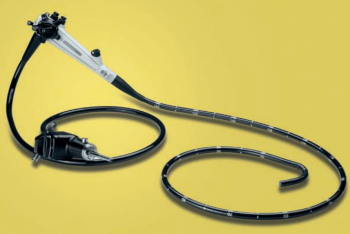
Currently, we provide a wide range of gastrointestinal flexible endoscopy systems, from mobile devices to HD high-end endoscopy systems combined with information storage devices for clinics to meet all the needs in the market.
The Silver Scope HD flexible videoscope product line combines advanced technologies, usability and durability. In addition to the pure white-light endoscopy techniques, the S-technologies image enhancement technology provides a variety of options to improve the field's clarity and visibility, as well as assist in the assessment of malignant lesions on the surface of the gastrointestinal tract.
Thoracic surgery
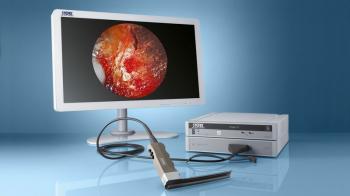
Nowadays, endoscopy has become the standard technique for interventional thoracic procedures, from the diagnosis of pleural disorders to major operations such as lobe resection. With the advantages of autofluorescence technology, bronchoscopy has become a useful tool in the early detection of lung tumors. Mediastinoscopy is used to dissect lymph nodes for the purpose of treating and diagnosing the extent of damage in lung cancer.
Karl Storz's thoracic intervention product portfolio includes endoscopic systems and instruments for fully endoscopic and endoscopic assisted surgery, thoracoscopy, mediastinoscopy and bronchoscopy, including fluorescence diagnostic technology.
- 1
- 2
